
Have you ever thought about outdoor ads having the same sparkle as digital campaigns? Imagine a billboard that tells you exactly who’s watching and how often they engage. Today’s outdoor advertising is all about real results, not just dazzling displays. Marketers now measure things like the number of views (impressions), the range of people reached, and the cost for every thousand views (a common way to price ads). This clear, numbers-based approach not only helps you understand every move in your campaign but also sparks fresh ideas for boosting your impact. In fact, this data-driven method challenges old advertising rules while opening up new opportunities.
Holistic OOH Campaign Performance Analysis Framework
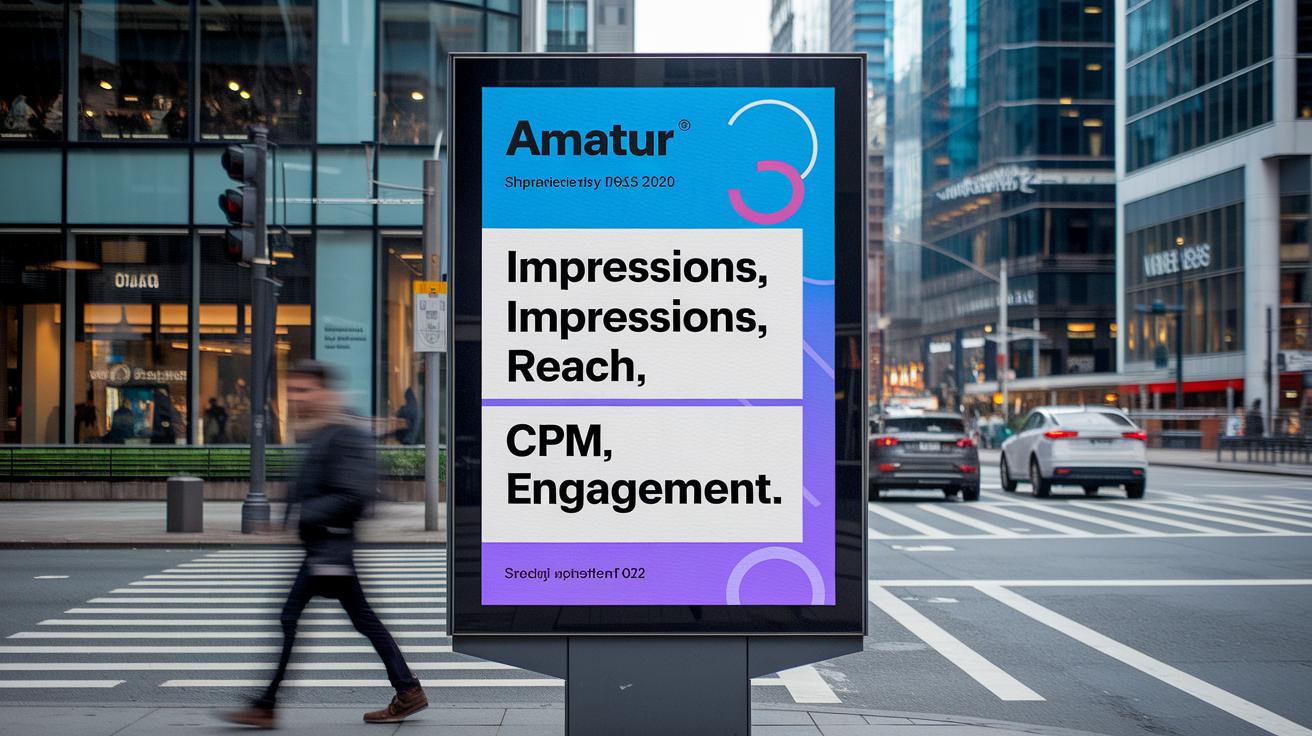
Outdoor advertising isn’t what it used to be. Today, measuring these campaigns is more like tracking digital ads. For instance, picture a digital billboard on a busy street that not only racks up views but also gives you real details on who’s watching and interacting. In short, every campaign is designed to drive results, not just eyeballs.
Key numbers now power the way we assess these campaigns. Think impressions, reach, frequency, CPM (cost per thousand views), proximity targeting, indexing, engagement, and conversion rate. Impressions tell you the total number of views, reach counts unique viewers, and frequency shows how often a person sees your ad. Meanwhile, CPM breaks down the cost, letting you compare different media choices to pick the best mix.
By weaving these metrics together, marketers now have a full framework for analyzing their campaigns. This data-driven approach means every dollar spent is tracked and optimized. It’s like curating your favorite playlist, each element is essential for hitting all the right notes.
| KPI | Definition | Measurement Method |
|---|---|---|
| Impressions | Total ad views | Traffic counts, visibility analysis |
| Reach | Unique individuals exposed | Audience tracking systems |
| Frequency | Average times seen by each person | Repeat exposure measures |
| CPM | Cost per thousand impressions | Cost analysis, media comparison |
| Proximity Targeting | Ads placed near key locations | Geo-targeting analytics |
| Indexing | Audience concentration vs average | Demographic data overlay |
| Engagement | User interactions with ads | QR scans, touch data |
| Conversion Rate | Percentage taking action | Sales/sign-up tracking |
Understanding OOH Impressions, Reach, Frequency & CPM
Impressions
When we talk impressions in out-of-home advertising, it’s not just about multiplying traffic counts by view probabilities. Modern sensor tech and real-time data now adjust these numbers based on things like weather, lighting, and even how people move. Imagine a digital billboard that recalculates its view estimates every 15 minutes – it’s all about capturing those changing conditions for a more accurate snapshot.
Reach vs Frequency
Balancing reach and frequency is really all about timing your message just right. You know how too many repeats can dull the impact? One local campaign cranked up the repeat factor without broadening its audience and saw engagement drop by 10%. Tinkering with ad rotations and timing can help keep things fresh while making real connections with viewers.
CPM
CPM, or cost per thousand impressions, isn’t just a cost figure anymore. Marketers now dive into the quality of the audience and their locations. Thanks to new OOH innovations, operators can adjust investments based on more detailed demographic insights. For instance, one smart billboard operator managed a 20% boost in cost efficiency by using detailed, on-the-ground performance data from different urban areas.
Leveraging Attribution & Lift Analysis in OOH Campaigns

When you’re setting up outdoor advertising, attribution analysis shows you which ad spots really make an impact. It helps you decide where to put your budget by spotlighting the units that truly drive results. Modern frameworks (like those discussed in a recent article on digital marketing attribution models) break down each unit’s performance based on its location, timing, and how people interact with it. Instead of just counting impressions, you get real insights into commercial outcomes. For example, one transit display in a busy area sparked a 15% boost in shopper engagement. That clear result lets marketers confidently choose the placements that click with their audience.
Here’s a simple way to approach it:
- Define control and treatment groups in similar market environments.
- Collect baseline data on current performance metrics.
- Implement targeted campaign variations for the treatment group.
- Compare results to measure actual ROI, covering both upper-funnel awareness and lower-funnel conversions.
Lift analysis takes those insights a step further by isolating the campaign’s direct impact. It sets up treatment and control groups to separate natural audience behavior from the true lift your campaign brings. Imagine showing a new ad to one group while keeping another group in the dark – the difference in their actions is your campaign’s lift. This technique makes sure every marketing dollar is tracked and optimized based on results you can clearly see and measure.
ooh campaign performance analysis delights marketers

Engagement Metrics Explained
Real-time tracking in DOOH advertising goes far beyond simple views. It now picks up events like QR code scans and touchscreen taps, so you see not just who saw the ad, but who actually interacted. Imagine a campaign that pulls you in with a digital screen, you get instant data that helps tweak creative elements for a better impact. For example, one screen saw a spike in tap rates during busy hours. Timing, as it turns out, really matters.
DCO and Real-Time Creative Adjustment
Dynamic Creative Optimization (DCO) is like the secret sauce that keeps campaigns fresh. It automatically tweaks ad content based on what’s happening right now, be it weather, local events, or the vibe of the moment. Picture a digital billboard that switches its look as sunset approaches, creating a calm, engaging mood. This real-time editing ensures every display feels right on target, no matter how fast things change.
Cross-Channel Conversion Tracking
Mixing offline impressions with online behavior paints a full picture of consumer action. Using easy tools like device ID matching (linking a device to ad viewing) and geo-fencing (using location signals), advertisers can follow a consumer's path from seeing an ad to taking the action. For instance, check out the approach detailed at https://adruckus.com?p=2446 to see how offline viewings connect to digital engagements. This process turns every interaction into a valuable touchpoint.
Privacy and Data Compliance Considerations
Even with a wealth of real-time data available, respecting privacy rules is key. Data is collected following strict industry guidelines, ensuring sensitive information stays protected. Marketers use anonymized details so tracking is both effective and secure. This balanced approach keeps campaigns smart while reassuring audiences that their personal info is safe.
OOH Campaign Performance Case Studies & Benchmark Insights

Case Study 1 shines a light on a digital highway billboard that commands attention. This display hit 500,000 impressions every week and even saw a 0.2% QR-scan rate (tracked using device IDs). Imagine cruising by and spotting an ad so intriguing that a few people can’t help but scan it on their phones. It’s a neat example of how modern tracking tools convert passing glances into measurable engagement.
This study also reveals that even a tiny bit of interactivity can boost campaign engagement dramatically. With smart placement and updated tracking methods, a typically static ad turns into a dynamic asset. It’s a win that shows how a simple billboard can evolve into a powerhouse of insight.
Case Study 2 dives into transit ads posted near a lively retail hub. These ads sparked a 15% increase in store visits, confirmed by geo-fencing (technology that detects and tracks nearby devices). Picture commuters finishing their rides and heading straight into a store after catching a well-timed ad. It’s a benchmark that clearly demonstrates the power of location-based data in driving immediate consumer actions.
The setup was honed to grab attention during rush hours. Geo-fencing tracked the precise spots where ads nudged consumer behavior as soon as people stepped off transit. This story reiterates the value of location intelligence in sharpening your campaign’s effectiveness.
Case Study 3 tells the story of an imaginative OOH takeover that stirred up a storm online. The campaign more than doubled social media buzz – jumping 120% in social mentions and branded hashtag usage – even without the usual click metrics. Imagine an eye-catching ad on a busy street that not only stops traffic but also sparks lively online chatter.
This creative twist turned an ordinary ad into a social catalyst. By fueling conversations across channels, the campaign extended its reach far beyond the physical space. It’s proof that a fresh, well-crafted idea can create waves both offline and online.
Data-Driven Optimization Strategies for OOH Campaigns

When you're dialing in your outdoor advertising, let your data be the compass. Think of smart site selection as the secret ingredient, using tools like index scores (a way to rank locations) and traffic heatmaps brings you straight to spots buzzing with potential customers. Testing different creative versions and adjusting the timing of your ads based on daypart performance gives you a live look at what clicks with your audience.
Shifting your budget toward placements that show strong CPM (cost per thousand impressions, a measure used to quantify ad spending) and a proven lift in results means your message lands in front of the right eyes at just the right moment. Not only do these moves boost your campaign’s immediate results, they also help you get a deeper feel for how your audience thinks and acts. Keeping an eye on performance dashboards ensures you’re always a step ahead.
Here’s a simple game plan to level up your OOH campaigns:
- Fine-tune your site selection with index scoring and traffic heatmaps.
- Experiment with different creative versions and adjust ad timings throughout the day.
- Redirect your budget to those high-ROI spots revealed by strong CPM and lift analysis.
- Measure broader impacts with halo-effect insights and brand surveys.
- Keep iterating with regular checks on performance dashboards and A/B tests.
This roadmap is a solid blueprint that keeps every part of your campaign sharp and on point. Using these strategies helps you make smarter moves and get more bang for your advertising buck, making your outdoor ads both smart and compelling.
Final Words
In the action of exploring advanced OOH campaign performance analysis, the article broke down key methods for measuring impressions, reach, frequency, and CPM. We took a close look at attribution and lift analysis, along with digital ways to gauge real-time engagement. Case studies and optimization strategies were shared to show how these tools drive smarter decisions. The insight into integrating creative tech with solid metric tracking makes every campaign a chance for growth. Here's to a future filled with smarter strategies and measurable success in OOH campaign performance analysis.
FAQ
Q: What are examples or resources for OOH campaign performance analysis?
A: The examples for OOH campaign performance analysis showcase reports and pdf resources that break down key metrics and strategies, giving you clear templates to assess campaign success.
Q: What is out-of-home advertising?
A: The term out-of-home advertising refers to marketing messages delivered via physical media, like billboards, transit displays, and digital screens, placed in public spaces to capture broad audiences.
Q: How is the effectiveness of out-of-home advertising measured?
A: Measuring the effectiveness of out-of-home advertising involves tracking key metrics such as impressions, reach, frequency, and conversion rates, along with modern methods like attribution and lift analysis to fine-tune strategies.
Q: What are the common OOH formats?
A: The popular OOH formats include traditional billboards, transit ads, digital screens, and street furniture placements, each offering distinct creative and reach opportunities for your campaigns.
Q: Where can I get the latest out-of-home advertising news?
A: The latest out-of-home advertising news surfaces in industry publications, specialty marketing journals, and on official websites of key organizations dedicated to advertising insights.
Q: What role does the Advertising Association of America play in the industry?
A: The Advertising Association of America plays a pivotal role by setting industry standards and offering guidelines that help campaign developers implement best practices across various media channels.
Q: What is the 3 3 3 rule in marketing?
A: The 3 3 3 rule in marketing breaks down concepts into three segments: three views, three key points, and three calls to action, aiming to simplify your content for efficient audience engagement.
Q: What is the 40-40-20 rule in marketing?
A: The 40-40-20 rule in marketing splits content into 40% educational, 40% inspirational, and 20% promotional material, ensuring a balanced message that resonates effectively.
Q: How do you analyze campaign performance?
A: Analyzing campaign performance means assessing metrics like impressions, reach, frequency, CPM, along with attribution data, to pinpoint strengths and refine your strategy for better results.