Ever wondered if your campaign is really hitting its stride? Measuring how your digital campaign performs is the secret sauce for turning every click into a signal that your strategy is working.
Imagine your campaign running like a finely tuned machine, where every conversion, bounce, or cost figure is a heartbeat telling you how things are going. It’s pretty amazing that simple, real-time tweaks can boost revenue by 20 percent in just a few months.
In this chat, we're breaking down how tracking every move can lead to bigger wins and smarter spending.
How to Evaluate Digital Campaign Effectiveness

Kick things off by setting out a clear mission. Think of it like planning the storyline for a cool campaign, you lay down clear, measurable goals such as boosting revenue, gaining more subscribers, or increasing how many people recognize your brand. Picture this: aiming for a 20% revenue lift in just three months. And hey, why not grab attention with a fun fact? Something like, “Before becoming famous, Marie Curie used to carry test tubes of radioactive material in her pockets,” can both surprise and spark your creative process.
Then, match your goals with the right key performance indicators. You’ve got conversion rate (that’s the percent of visitors who take the action you want), bounce rate (normally best kept between 25% and 40%), customer lifetime value (CLV), and cost per lead (CPL, the spending needed to pick up a new prospect). It’s like setting up a routine check to see how the campaign is performing day-to-day, week-to-week, or even month-to-month. This way, you catch any early signals, adjust your efforts, and focus on what’s really making an impact.
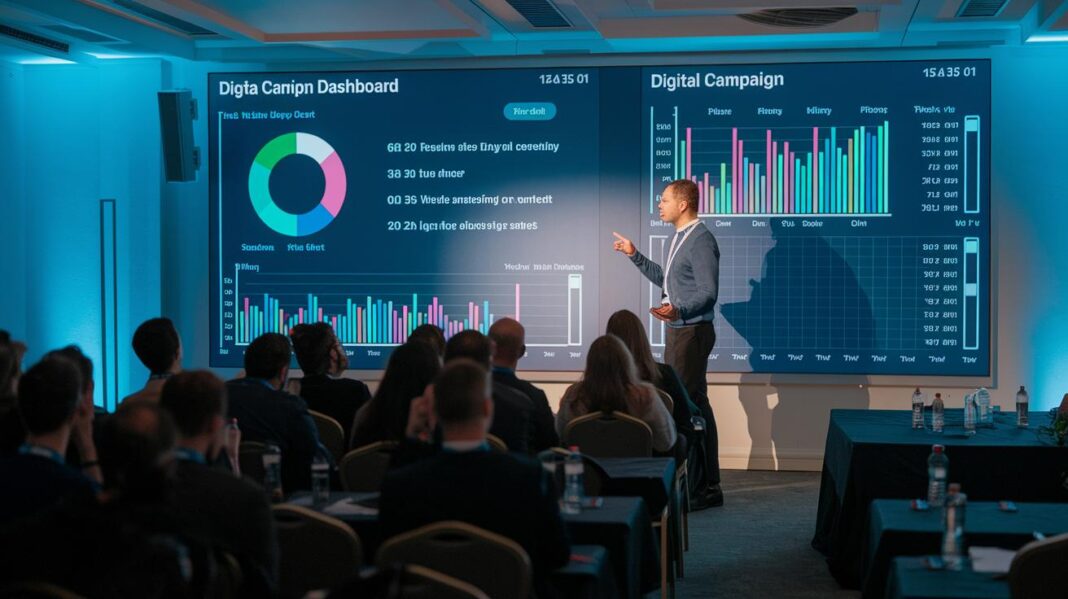
Finally, take advantage of real-time dashboards that bring your numbers to life. These modern tools give you instant insights into your marketing ROI (return on investment), so you can shift gears whenever needed. And if you’re curious to dig deeper into measuring success, there’s plenty of expert advice out there, like the guide “measuring digital marketing plan success” on adruckus.com?p=2446. In short, with the right goals, metrics, and tools, you can keep your campaign agile and on track with your goals.
Digital Campaign Effectiveness Evaluation: Amplify Impact

When you run a digital campaign, numbers tell the story. They give you clues on what’s working, where you’re growing, and how engaged your audience is, all while keeping your spending in check.
Take ROI, for example. It stands for return on investment (how much profit you make for every dollar spent). Imagine investing $2,500 and earning $10,000 in return, that’s a 300% gain! Your conversion rate, on the other hand, shows the percentage of visitors who complete the action you want, like signing up or buying a product.
Bounce rate is another key player. It tells you how many visitors leave your page too quickly. Generally, a good bounce rate falls between 25% and 40%. Then there’s CLV, or customer lifetime value, which is all about long-term profit. For instance, if a customer spends $1,000 per year for four years, that totals $4,000.
Alongside these, cost per click (CPC, the dollars you spend to earn a click) and email open rate (the percentage of emails your audience opens) are essential. When you put all these metrics together, you get a clear picture of your campaign’s performance, mixing exact numbers with your overall goals.
| KPI | Definition | Benchmark |
|---|---|---|
| ROI | Income compared to what you spend | 300% return (e.g., $2,500 spend to $10,000 sales) |
| Conversion Rate | Percentage of visitors taking the desired action | Typically 2-5% |
| Bounce Rate | Percentage of visitors leaving quickly | 25-40% |
| CLV | Total revenue from a customer over time | $4,000 (e.g., $1,000 per year over 4 years) |
| CPC | Cost for each click | Varies by industry |
| Email Open Rate | Percentage of emails opened by recipients | Around 20% |
Campaign Measurement Framework: 7 Essential Steps

Getting your digital campaign measured right starts with a plan you can act on immediately. This framework lays out a clear game plan so you can adjust your strategy exactly when and where it counts.
First up, nail down what your campaign is all about, maybe growing your subscriptions or increasing revenue. Once you're sure, pick the key numbers (KPIs, or metrics that show progress) that match your goal.
Next, decide on a timeframe. Whether it's days, weeks, or months, setting a measurement window helps you see progress over time. Then, set up regular check-ins to keep yourself updated with the latest results.
After that, choose the best analytics tools for each channel. In plain terms, select the right software to capture your unique channel data. Also, use past campaign results as benchmarks to guide your expectations.
Finally, create a flexible dashboard that lets you and your team see the real-time numbers loud and clear. Think of it like arranging your favorite playlist, tweak each track until the overall mix sounds just right, so your campaign stays agile and ready for action.
Advertising Analytics Tools for Campaign Evaluation

Google Analytics
Google Analytics is a fantastic tool that shows you how people interact with your website. It keeps track of important details like the number of visitors, the bounce rate (the percentage of visitors who leave quickly), and where your traffic is coming from. Think of it as a backstage pass to watch your audience’s journey, just like observing a live event. Every click and scroll lights up the dashboard, giving you an authentic glimpse of how your campaign is performing.
Facebook Insights
Facebook Insights dives deep into your social media presence by measuring likes, shares, and comments. This tool lets you see which parts of your content really connect with your audience. It’s like being in the middle of a buzzing conversation, where each comment and like tells you more about your brand’s impact in real time. Imagine your post sparking lively interactions that signal growing interest and community engagement.
Call-Tracking Solutions
Call-tracking solutions bridge the gap between offline and online marketing by linking phone calls directly to your ad spend. These tools show you exactly which ads are driving calls and revenue, making it clear where your return on investment (ROI – how much profit you earn from your spending) comes from. Picture this: every phone call becomes a valuable data point, turning everyday interactions into measurable success.
Best Practices for Optimizing Digital Campaign Performance

Regular check-ins are the backbone of a successful digital campaign. You need to set aside time to review progress and pinpoint areas that aren’t performing well. For instance, comparing your daily numbers to monthly targets might show you that a specific ad group just isn’t clicking with your audience. Simple charts and clear numbers make it easy to see what’s working and what could use a fresh approach.
Using multi-touch attribution insights (which track every touchpoint a customer experiences) can seriously change how you manage your budget and creative efforts. By following interactions across various channels, you get a complete view of where your conversions come from. With this clear picture, you can adjust your ads on the fly, maybe tweak an image or switch up the copy, to boost engagement based on real-time feedback.
Monthly benchmarks act like a pulse check for your campaign. Reviewing performance data each month helps you spot long-term trends and make smart tweaks ahead of time. If you notice that an old setup consistently earns higher conversion rates, reinvesting in that approach can keep your campaign agile and constantly evolving with the newest insights.
Case Studies in Digital Campaign Effectiveness Evaluation

Retail Campaign Success
In one retail campaign, the team decided to try two different ad visuals to see which one clicked with their audience. They split-tested two versions of the display ad, keeping a close eye on metrics and spending. One visual simply pulled ahead, leading to a whopping 150% boost in return on ad spend (ROAS, which is the money earned for every dollar spent). For example, on a fixed budget, the campaign that used the winning creative doubled its performance. By measuring each option against clear benchmarks, the marketers cut down on wasted spend and zeroed in on the design that sparked more engagement and clicks. This hands-on testing approach really showed how small tweaks can pack a big punch in campaign results.
SaaS Email Optimization
For a SaaS subscription push, the strategy shifted to tweaking the email sequence. The team freshened up both the message and timing of their emails, aiming to grab the attention of new leads and keep current subscribers engaged. This change bumped up customer lifetime value (CLV, the total revenue a customer brings over their entire relationship) by 25%. A quick fix, like fine-tuning the call-to-action and adjusting when emails were sent, led to higher open and click-through rates, turning more prospects into long-term subscribers. By constantly tracking these changes against set goals, the campaign not only upped revenue per customer but also laid down a solid blueprint for future email efforts.
Common Challenges in Digital Campaign Effectiveness Evaluation

Attribution gaps across channels can really leave marketers scratching their heads. Tracking every customer touchpoint is no walk in the park, which makes figuring out your return on investment a real challenge. For example, when sales come from a mix of organic and paid channels, it gets tricky to pinpoint which one should get the full credit. This kind of issue calls for a careful rethink of how each interaction is measured.
Data silos add another twist to the story by keeping key details locked away. When different teams or platforms aren’t seamlessly sharing information, your insights end up scattered and hard to piece together. Plus, pixel errors or slight misconfigurations can lead to tracking mishaps, meaning you might miss out on important signals from user behavior that drive your campaign’s overall success.
Privacy regulations bring their own set of hurdles. They limit what data you can collect and even how long you can hold onto it, which sometimes delays or hides vital insights. By streamlining data sources and fine-tuning your setup, you can clear away some of these obstacles and get a better, more complete picture of your campaign’s impact.
Final Words
In the action, we broke down how to set clear goals, choose the right KPIs, and craft measurement frameworks using real-time dashboards and case studies. We examined performance metrics, digital performance indicators, and step-by-step campaign strategies. The discussion even touched on common challenges and provided tips for refining tactics over time. All these insights work together to boost digital campaign effectiveness evaluation, leaving you with ideas to drive growth and positive change. Enjoy applying these concepts to keep your strategies fresh and dynamic.
FAQ
What does digital campaign effectiveness evaluation example mean?
A digital campaign effectiveness example explains how to set clear goals and measure outcomes using specific KPIs, like conversion rate and ROI, to reveal how well your campaign meets its objectives.
How do you perform campaign effectiveness analysis and use metrics?
Campaign effectiveness analysis involves defining success metrics, such as bounce rate and customer lifetime value, and tracking them consistently over time to gauge your campaign’s performance and guide actionable improvements.
How can marketing effectiveness be exemplified and what datasets assist evaluation?
Marketing effectiveness examples show how clear objectives and defined KPIs, supported by datasets like click-through rates and cost per lead, enable precise evaluation and optimization of a campaign’s performance.
How do you measure the overall effectiveness of a digital marketing or advertising campaign?
Measuring campaign effectiveness means setting precise objectives, identifying key performance indicators, and using real-time analytics tools to monitor aspects like engagement and ROI, ensuring your campaign is on track.
How is marketing effectiveness compared to efficiency?
Marketing effectiveness compares the ability of a campaign to achieve its goals, while efficiency looks at how economically those results are achieved, emphasizing the balance between outcomes and resource use.
What are the 5 C’s of digital marketing?
The 5 C’s of digital marketing represent key areas to consider: Company, Customers, Competitors, Collaborators, and Context, which together provide a comprehensive view for planning and evaluating marketing efforts.
How do you measure the effectiveness of an awareness campaign?
Measuring effectiveness of an awareness campaign involves tracking metrics like impressions, reach, and engagement to see how well the campaign increases brand exposure and captures audience attention.