
Ever wonder if bold moves can give your business that extra kick?
Small companies are finding their groove by mixing creative online ideas with the classic offline tricks we all trust.
Imagine a captivating website, lively social posts, and smart, local ads that pull customers right in. Sometimes, even a tight budget can spark incredible growth when you plan just right.
In this post, I’ll share flexible strategies that turn even the smallest shops into buzzing brands.
Smart marketing isn’t rocket science, it’s a clear path to genuine growth.
Proven Marketing Strategies for Small Businesses to Drive Growth

Small businesses can see a revenue boost promptly by blending digital channels with classic approaches. For example, combining engaging social media tactics, PPC ads (pay-per-click, where you pay only when someone clicks your ad), and creative guerrilla marketing can quickly draw in new customers. Ever noticed how a daring move can turn the tide? Consider how Marie Curie, before finding her path as a renowned scientist, once carried radioactive test tubes in her pockets, a risky habit that underlines the payoff of bold, unexpected strategies.
Let’s break down some key ideas:
Optimize your digital footprint by crafting a user-friendly website, using clear calls-to-action, and setting up a strong email marketing system. Email campaigns, known for their measurable return on investment, can also be automated to consistently nurture leads.
Invest in PPC ads so you only spend money when a user clicks. This pocket-friendly approach gets your brand right in front of interested customers at the exact moment they are searching for your services.
Strengthen your local presence by claiming your Google Business Profile, which can boost how often you appear in local searches. Adding your business to local directories can fine-tune this process even more.
Connect with your audience on social media platforms. With over half of customers discovering brands on sites like Instagram and Facebook, posting regular and tailored content is essential.
Tap into video marketing, which has been shown to increase sales significantly, by up to 87% in some cases. Don’t forget the power of word-of-mouth referrals and networking events, credited by 83% of brands for bringing in extra leads.
Explore unconventional (guerrilla) marketing methods that add an element of surprise, such as community events, alongside traditional print ads and targeted direct mail campaigns.
Mix and match these tactics to create a customer acquisition system that’s flexible and repeatable, ready to adapt as trends evolve.
| Strategy | Example Benefit |
|---|---|
| PPC Advertising | Cost per click efficiency |
| Email Marketing | High ROI from targeted messages |
Social Media Marketing Tactics for Small Business Growth

Social media stays a huge disruptor for local brands. Did you know that 55% of customers find new products on these channels? Small businesses can really benefit by collaborating with micro-influencers (those with around 1,000 to 50,000 followers) since they bring genuine authenticity to your message. For instance, you might kick off your story like this: "Our local café doubled its foot traffic when a popular micro-influencer gave a behind-the-scenes peek into our secret brew process."
Another winning tactic is to encourage user-generated content. Invite your customers to share their experiences using a branded hashtag or launch a fun photo contest that shows how your product fits into their everyday community life. These authentic endorsements can spark viral campaigns and build real trust with potential customers.
Consider also partnering with neighboring businesses. Rather than competing, join forces to create joint posts, offer special deals, or host local events that celebrate the best your community has to offer. This strategy not only broadens your reach but also deepens local connections.
And don't overlook the power of repurposing. If a Facebook post performs well, try adapting it into an Instagram Story or even tweeting its central idea. This way, every piece of content you create works harder, reaching different audiences in various ways.
- Partner with micro-influencers
- Encourage user-generated content
- Engage in co-marketing partnerships
- Repurpose high-engagement posts
Finally, keep a close eye on the latest social media trends (social media trends). Staying updated will help you fine-tune your tactics and stay ahead in the fast-changing digital landscape.
Email Campaign Strategies and Automation for Small Businesses

For small businesses, email marketing is still a go-to strategy, a smart, budget-friendly way to connect with customers. Start by mapping out smart email workflows that gently nudge leads along a clear buying journey. First up, build a segmented list, grouping your contacts by their interests, behaviors, or past purchases. Imagine running a local coffee shop and sorting customers by their favorite brew, it’s as simple as that.
Next, dive into automated email workflows. Automation sends out a series of messages automatically, from a friendly welcome note right after someone signs up to regular product updates and re-engagement offers. Picture this: as soon as a customer joins, they get a warm, personal email saying, "Hey, Sarah, thanks for joining our coffee club, here’s 15% off your next latte." This kind of timely, tailored touch often boosts both open rates and click-throughs.
Personalization is the secret sauce. Use your customer’s name and refer back to what they’ve enjoyed before. This simple tweak can really ramp up your conversion rates and build a genuine connection with your audience.
| Step | Description |
|---|---|
| 1 | Build and segment your subscriber lists based on clear, relatable criteria. |
| 2 | Create a sequence of automated emails to guide your subscribers along their customer journey. |
| 3 | Personalize each message to make every recipient feel uniquely valued. |
By merging these lead nurturing ideas with clever automation, you're setting up a system that keeps your audience engaged and steadily boosts your conversions and revenue. Give it a try and watch the difference a personal touch can make!
SEO and Local Search Optimization for Emerging Small Businesses

Small businesses need to shine online, and it turns out the top ten Google results capture 86% of all clicks. That means if you’re visible locally, you’re way ahead of the pack.
Start by setting up a Google Business Profile and getting into local directories. For instance, one business boosted its local visibility by over 50% after optimizing its profile and listings.
Then take it a step further with advanced tactics like local keyword research. This simply means finding search terms that mix your service with your neighborhood. Picture an ad that says, "Local Bakery in Midtown – Fresh Pastries Every Morning."
Next, polish your website with on-page SEO tailored for local searches. This could involve adding your town's name to your page titles and headers, along with helpful details like your store hours and a mini map for easy navigation.
Also, keep an eye on your online reviews. Regular, friendly responses can build trust and give your rankings a nice little nudge. Imagine how a thoughtful reply might encourage future customers to give your service a try.
| Strategy | Impact |
|---|---|
| Google Business Profile & Directory Listings | Enhances basic local presence |
| Local Keyword Research | Targets searches in your neighborhood |
| On-page SEO for Local Searches | Boosts relevance for nearby customers |
| Managing Online Reviews | Builds trust and helps rankings |
These smart tactics give emerging small businesses new ways to stand out and connect with local customers in a meaningful way.
Low-Budget and Guerrilla Marketing Ideas for Small Businesses

If you're running a small business, you can make a big impact even with a tiny budget. Picture blending a friendly referral system with hands-on community workshops and cheeky street stunts to get your name out there.
For example, set up a referral program that offers a deal like, "Invite a friend to try our service and both score 10% off your next purchase." This type of offer can spark word-of-mouth buzz and build trust in your local community.
Next, mix in a fun workshop to connect even deeper with your neighbors. Think of a free DIY session where your customers learn a neat skill related to your service, it’s a relaxed way to bring people together and show off your creative side.
Then, why not add an unexpected twist with something like a flash mob? A spontaneous, eye-catching performance that reflects your brand’s personality can really stick in people's minds. For a dose of inspiration, check out guerilla marketing examples.
- Referral programs spark word-of-mouth.
- Community workshops build local bonds.
- Flash mobs add a creative, memorable twist.
Finally, don’t underestimate the power of face-to-face networking at trade events. Genuine, personal interactions can go a long way in making your brand unforgettable.
Content Marketing Strategies and Blog Promotion for Small Businesses

Start by mapping out a content plan that mixes genuine storytelling with smart SEO techniques (SEO means using specific keywords to boost search engine results). Think about topics that truly matter to your local community. For instance, picture a blog post kicking off with, “When our neighborhood bakery unveiled their secret recipe series, our posts became must-read invitations for dedicated fans.” This blend of real stories and SEO-friendly details builds trust and drives more organic traffic.
Next, look at your most popular posts and consider turning them into other formats like ebooks, webinars, bite-sized social media snippets, or even printable guides. Imagine converting an interesting article into a practical checklist that readers can use over and over. This approach not only broadens your audience but also establishes your business as an expert in your field.
Then, invest some time in setting up a solid content calendar. A clear plan helps you schedule posts, pick trending topics, and coordinate different types of content. It's a bit like planning out a friendly conversation with your audience, ensuring you always have something timely to share. For a few practical tips, check out marketing strategy examples for ready-to-use calendar templates.
By fusing engaging storytelling with thoughtful SEO and smart content repurposing, you build a steady, cost-effective channel for growing customer engagement and organic reach as your business expands.
Measuring Success: Analytics and ROI Tracking for Small Business Marketing

Small business owners can really connect with customers by using tools like Google Analytics and Search Console. These handy tools help you see key details such as conversion rates (how many visitors take a desired action), where your visitors are coming from, and how they behave on your site. Check your data regularly and you’ll quickly spot which campaigns are clicking and which ones might need a little tweak. Imagine the thrill of setting up your own dashboard and watching that conversion rate jump from 2% to 4% during a well-timed email promo. That’s not magic, it’s smart use of analytics guiding your next budget decision.
Kick off your tracking by zeroing in on important performance points like:
- Conversion Rate: The percentage of visitors who complete your desired action.
- Traffic Sources: A look at where your visitors are finding you.
- User Engagement: The time and interactions visitors have on your site.
| Metric | Impact |
|---|---|
| Conversion Rate | Shows how effective your campaign is |
| Traffic Sources | Reveals which channels bring in the most visitors |
Regularly reviewing these insights lets you fine-tune your spending and shift funds toward the tactics that deliver the best return on investment. This ongoing process keeps your marketing efforts responsive and on target, making sure every campaign feels fresh and hits the mark.
Building a Scalable Marketing Plan Template for Small Businesses
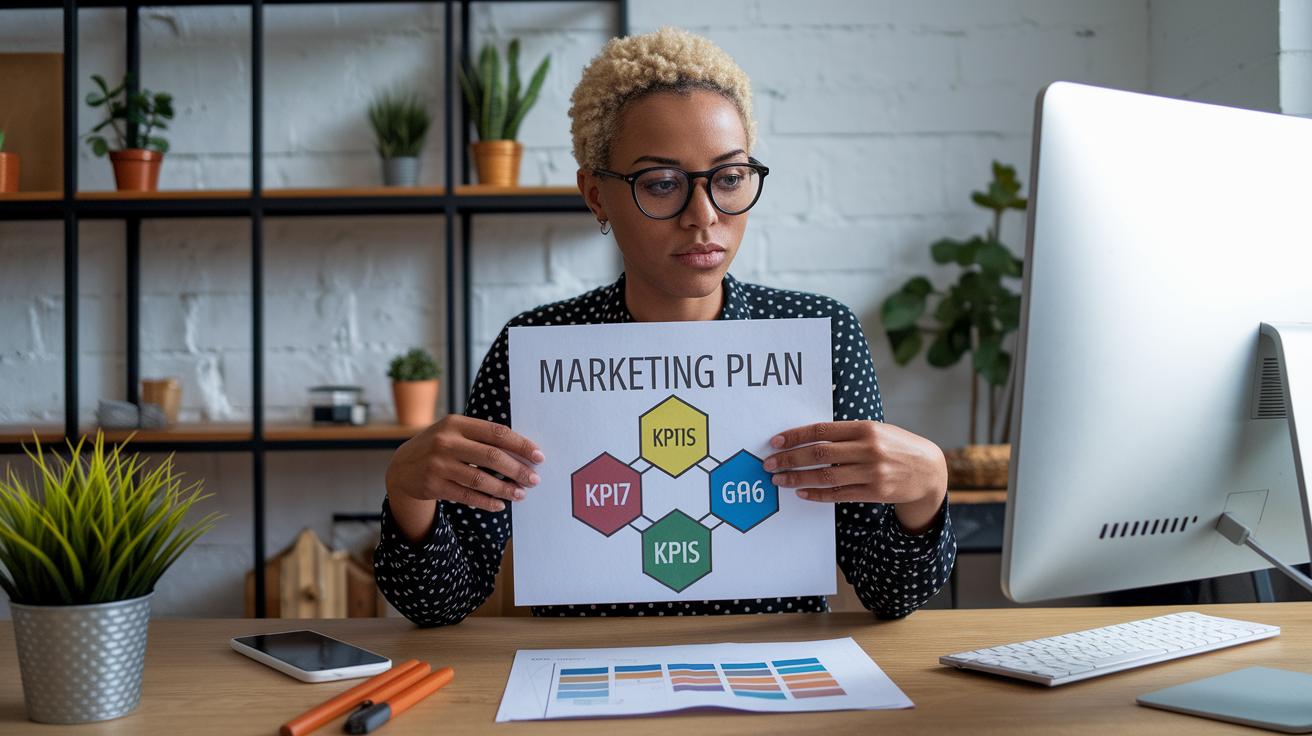
When you're mapping out your marketing strategy, start with a simple, clear structure that not only rallies your vision but also promises tangible results. Begin by pinpointing your target audience. For example, jot down: "Target Audience: Young families in suburban areas seeking quality local services." It’s like drawing your roadmap before embarking on an exciting journey.
Next, nail down your unique edge. Write a brief statement explaining why your business shines, think, "Our Value: Personalized service that meets neighborhood needs." This is your chance to stand apart from the crowd and connect directly with your community.
Now, carve out your brand identity by detailing your mission, tone, and visual vibe. Then, plot the customer journey by breaking it into clear stages like awareness, consideration, and conversion. For instance, you might plan: "Step 1: Build awareness via local social media, Step 2: Drive consideration with engaging email content, Step 3: Seal conversion with well-timed offers." Each step is a building block that leads your potential customers right to your door.
Use a fill-in-the-blank template with these essential sections:
| Section | Description |
|---|---|
| Marketing Goals | Set SMART goals (Specific, Measurable, Achievable, Relevant, Time-bound). For example, “Increase local inquiries by 20% in three months.” |
| Budget Allocation | Outline funds for digital channels, print ads, and community events. |
| Core Channels | Select primary platforms like a mobile-friendly website, active social media profiles, and local radio spots. |
| Key Performance Indicators | List measurable metrics such as conversion rates, website traffic, and response rates. |
Finally, plan for a multi-channel burst by combining digital and traditional techniques. Make sure you include a section for CRM integration (customer relationship management – a tool to help track contacts) to nurture potential leads with ease. Think of this template as your personalized map, ready to align your resources, timeline, and performance markers to power up your marketing results.
Final Words
In the action, the blog broke down proven marketing strategies for small businesses, from social media buzz and email magic to boosting local search results and creative guerrilla ideas.
Each tactic was presented to help you gain immediate, actionable insights that drive customer acquisition.
By mixing conventional techniques with inventive approaches, this guide equips you to build a flexible plan and measure success in real time.
Embrace these marketing strategies for small businesses and watch your efforts turn into tangible growth.
FAQ
Q: What are some unique marketing strategies for small businesses?
A: Unique marketing strategies for small businesses incorporate creative tactics that set your brand apart, like guerrilla campaigns, local collaborations, and interactive social media contests that spark engagement and grow customer trust.
Q: Where can I find a PDF of marketing strategies for small businesses?
A: A PDF on marketing strategies for small businesses typically compiles proven tactics and actionable insights, providing a neat resource that you can easily reference during your campaign planning.
Q: What free marketing strategies for small businesses are available?
A: Free marketing strategies for small businesses include organic social media outreach, basic email campaigns with low-cost automation, and optimizing local website presence to drive organic traffic without a heavy ad spend.
Q: What are some examples of the best influencer marketing strategies for small businesses?
A: The best influencer marketing strategies for small businesses feature collaborations with micro-influencers, authentic content co-creation, and storytelling campaigns that build trust and extend your brand’s local reach.
Q: What are the best marketing strategies for small businesses?
A: The best marketing strategies for small businesses blend social media, SEO, email outreach, and community events with targeted campaigns that drive customer engagement, boost traffic, and result in higher conversion rates.
Q: What are some marketing strategy examples and ideas for business growth?
A: Marketing strategy examples for business growth range from targeted digital campaigns and engaging content marketing to local SEO and referral programs, all designed to attract customers and scale revenue with limited investment.
Q: What are the 4 marketing strategies?
A: The 4 marketing strategies typically refer to Price, Product, Promotion, and Place, which together create a balanced mix addressing pricing, features, advertising, and distribution to drive market impact.
Q: What are the 7 P’s of marketing?
A: The 7 P’s of marketing include Product, Price, Place, Promotion, People, Process, and Physical evidence, offering a thorough framework that guides every aspect of delivering your brand’s service and message.
Q: What are the 5 P’s of marketing?
A: The 5 P’s of marketing focus on Product, Price, Place, Promotion, and People, capturing the essential elements that refine your campaign strategies and ensure every key aspect of your brand’s offering is considered.