
Ever get the feeling your mobile app hides clues about what your customers really want? Every tap, swipe, and scroll shows you exactly how they interact with your platform. In this post, we dive into cool strategies for picking up these subtle signals and adjusting your campaigns in real time.
We’ll show you how keeping an eye on live data and mixing insights from various sources (like combining website stats with app usage data) gives you a complete picture of customer behavior. This insider view helps you sharpen every campaign, making it easier to connect with your audience and drive success.
Mobile Consumer Insights Strategies Ignite Success

Use mobile SDKs to capture every user signal. Adding an SDK means you can track in-app events and sensor data like movement, ambient light, and every touch. For instance, you might say, "After we set up our SDK, every swipe, touch, and tap uncovered fresh insights into our app's usage." This approach makes tracking digital behavior clear while deepening your understanding of customer habits.
Set up live monitoring dashboards so you can watch data stream in real time. These dashboards offer an immediate look at how devices are used and highlight emerging trends. Picture live graphs showing session lengths and activity spikes, this gives your team the clarity to adjust campaigns on the fly. With tools like these, you can quickly spot shifts in user behavior and fine-tune the experience.
Combine data from mobile apps, websites, and even in-store devices to get a complete picture of customer interactions. Cross-channel analysis shines a light on hidden patterns, much like assembling a puzzle where each data point contributes to the full image of customer habits.
Set key performance indicators like conversion events, session duration, and retention trends. Compare these figures against standard benchmarks from trusted resources (like Marketing Analytics Best Practices). This ongoing measurement refines your mobile consumer insights strategy, making every campaign more informed and effective.
Advanced App Engagement Analysis Strategies in Mobile Insights

When you’re tracking how users interact with your app, key numbers like DAU/MAU (daily active users compared to monthly active users), session length, retention curves, and event funnels are like your go-to signals. Think of the DAU/MAU ratio as a quick pulse check, showing how often people come back, while session length reveals if your content really holds their attention.
Checking what users do inside your app gives you insights you can use right away. For example, when the retention curve dips or event funnels highlight a drop-off point, it’s a clear sign to tweak features or adjust messaging. This real-time review helps teams respond quickly to user behavior.
Here are the main metrics to keep an eye on:
- Daily Active Users
- Session Duration
- Retention Rate
- Churn Rate (the rate at which users stop using the app)
- Lifetime Value
- Conversion Events
By using these numbers, you can segment your audience and craft lifecycle campaigns that speak directly to different user groups. Pairing these metrics with actual user interactions helps you tailor in-app experiences, whether you're fine-tuning push notifications or rearranging layouts. In the fast-moving world of mobile marketing, a deep understanding of these figures paves the way for smarter campaigns and more personal user journeys.
Designing Effective Mobile Surveys and Feedback Collection
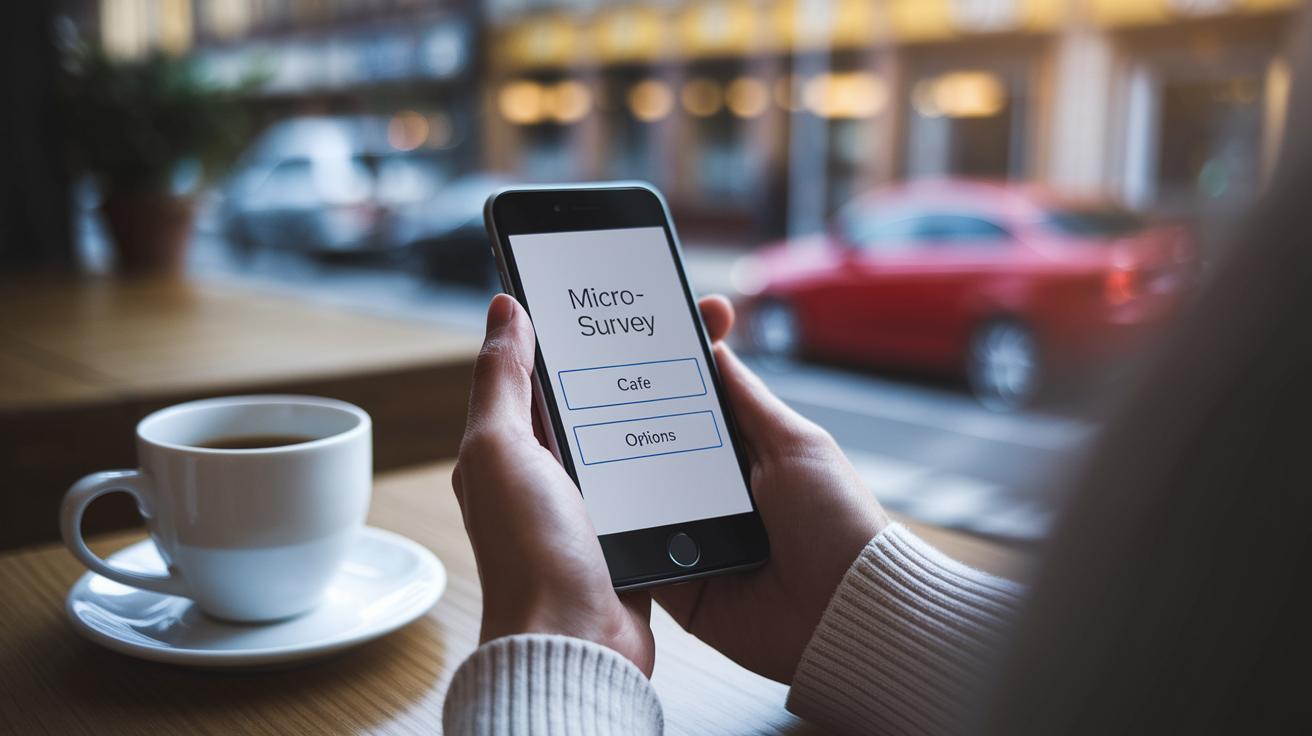
Mobile surveys offer a fast way to gauge user sentiment or dive deep into what people truly feel. Micro-surveys are short, interactive questions that pop up at key moments. They capture user impressions like a quick snapshot. Meanwhile, full questionnaires provide deeper insights but need more time and commitment, much like jotting down your thoughts in a diary.
To build effective in-app surveys, try these five friendly steps:
- Define your target group and choose the right moment – Pick the user segment and decide when the survey should appear, like soon after a key action.
- Craft short, clear questions (no more than five) – Keep it simple. For example, “How would you rate your experience?” says it all.
- Pick the perfect timing – Decide whether your survey should pop up at the end of a session or when a user reaches a specific spot.
- Offer a little incentive – A small reward or perk can motivate users to share their thoughts.
- Integrate responses into real-time dashboards – Feed the data into monitoring systems so you can act on fresh insights almost immediately.
When it comes to survey results, focus on overall trends rather than one-off comments. Notice a pattern? It might be a signal to adjust your app features or messaging. This open feedback loop not only builds trust but also sharpens your strategy, turning every survey into a stepping stone for an even better user experience.
Leveraging Geolocation and Cross-Channel Data in Mobile Insights

Collecting and anonymizing GPS and beacon data offers a smart way to pinpoint the hottest spots. By capturing location signals bouncing off devices, you can easily see where the buzz is strongest, like tracking GPS coordinates at local events or popular shopping districts. It turns random data into clear signals of high customer interest. Plus, you can set geo-fencing triggers, so when a customer steps into a specific zone, you get an instant alert to send out a timely offer. This method not only reveals patterns in device usage but also sheds light on changing consumer habits, all while keeping personal data safe.
When you mix these location signals with info from your CRM and campaign logs, you create a full picture of the customer journey. Integrating data from various channels lets you watch digital touchpoints, from website clicks to email interactions and even in-store visits, come together in one neat story. For example, you might see that after a proximity alert, a customer checks their email and later stops by your store. This complete view helps you track every step, from the initial geo-alert to the final purchase, making it easier to fine-tune your marketing tactics. It shows you how in-store promos and online follow-ups combine to capture mobile consumer engagement in a way that truly resonates.
Evaluating Mobile Insights Platforms and Analytics Tools

When you’re checking out mobile insights platforms, it helps to know what kind of tools are out there. Some solutions use SDKs that connect directly to your app, giving you real-time details on what’s happening. Others use cloud analytics to automatically pull in big chunks of data from lots of sources. And then there are unified CDPs that mix mobile info with offline data to show you a full picture of how people behave.
Picking the right tool really depends on what your marketing goals are and how your team works. Every option offers its own cool features that can change the way you see your data. A smart dashboard can reveal trends and insights you might otherwise miss. Check out this quick look at four popular tools:
| Tool Name | Key Features | Best Use Case | Pricing Model |
|---|---|---|---|
| Platform A | Real-time events, funnels | High-frequency apps | Per MAU |
| Platform B | Geo + CRM integration | Location-based marketing | Tiered subscription |
| Platform C | In-app surveys, NPS | Feedback loops | Per survey response |
| Platform D | CDP + cross-channel | Omnichannel campaigns | Custom quote |
When comparing these tools, think about what matters most for your business. Is it important that the platform grows as you get more users? What about fitting in seamlessly with the systems you already use? And don’t forget about data rules, your platform should handle your info safely and clearly. Plus, a flexible dashboard that lets you tweak reports to show the numbers you care about can make a huge difference.
For more on current trends and tips, take a look at Data-Driven Marketing Trends. This guide aims to help you pick a platform that not only handles your data smoothly but also gives your team the insights they need to take action.
Applying Mobile Consumer Insights Strategies to Campaign Optimization

Refining your campaigns with mobile consumer insights can really boost your results. By watching user behavior, key performance markers, and shifts in activity, you get a clear picture of what works. For example, checking click-through rates and conversion events shows you which parts of your campaign hit home. This hands-on tracking helps you better allocate your budget and fine-tune your messaging.
A/B Testing with Mobile Segments
Divide your users into groups based on how they behave and the type of device they use. For instance, create groups by habits and even by smartphone model or operating system (the software running on your phone). Try out different push notifications, in-app messages, or design tweaks. Compare open rates, click rates, and conversion events in each group to see which one wins. Fun fact: testing two push messages, one with a playful tone and another that’s straightforward, led to a 15% boost in engagement for the playful version.
Dynamic Content Personalization
Real-time signals let you adjust your content on the fly to match what users need at that moment. First, feed event data into your decision engine to capture mobile actions as they happen. Next, set up rules to change app banners, tweak offers, or modify user journeys based on smart predictions. For example, if a user frequently buys a certain item, trigger a custom offer or adjust the content to keep them hooked. Track improvements by checking shifts in conversion rates and other performance markers. This approach blends trend forecasting with conversion optimization to make your campaigns more agile and effective.
Final Words
In the action, we unpacked a variety of techniques from capturing in-app events and sensor data to refining app engagement metrics and survey designs. We showed how geolocation and cross-channel data can combine for sharper customer insights and explored the pros and cons of various mobile insights platforms. Each section builds a clear, practical framework for turning consumer behavior into creative campaign enhancements. This hands-on guide reinforces mobile consumer insights strategies that empower smart, effective marketing moves. It's all about turning data into dynamic action.
FAQ
Mobile consumer insights strategies PDF
The mobile consumer insights strategies PDF outlines detailed methods for tracking smartphone analytics trends through SDKs, in-app events, and real-time data monitoring. It offers clear steps to gather actionable consumer data.
Mobile consumer insights strategies examples
Mobile consumer insights strategies examples include using surveys, dashboards, and geolocation data to track user behavior. They provide clear, actionable tactics for refining mobile campaigns with real-time feedback.
Mobile consumer insights strategies 2022
Mobile consumer insights strategies from 2022 updated data collection methods, emphasizing cross-channel analysis and device usage statistics. Marketers benefited from enhanced techniques for tracking in-app events and real-time consumer shifts.
Best mobile consumer insights strategies
The best mobile consumer insights strategies combine real-time monitoring, cross-channel data aggregation, and smartphone usage metrics. They help marketers pinpoint consumer behaviors for smarter campaign decisions.
Mobile marketing strategy
A mobile marketing strategy defines the approach for engaging users on mobile devices. It incorporates tactics like push notifications, in-app messages, and location-based offers to drive consumer engagement.
Mobile marketing strategy PDF
The mobile marketing strategy PDF offers a practical guide on key mobile tactics, covering in-app survey designs, geolocation tracking, and dynamic content personalization to help optimize campaigns and boost interaction.
Mobile marketing examples
Mobile marketing examples include targeted push notifications, interactive in-app messages, and geo-targeted offers that drive user engagement and conversions, illustrating clear, data-driven campaign tactics.
Mobile marketing tools
Mobile marketing tools are digital solutions that manage in-app analytics, track consumer behavior, and execute targeted campaigns. They provide real-time insights that support strategic decision-making.
What are the mobile marketing strategies?
Mobile marketing strategies involve targeting users on mobile devices using channels such as SMS, push notifications, and location-based services. They merge consumer data insights with creative messaging to enhance campaign outcomes.
What are the 4 C’s of consumer Behaviour?
The 4 C’s of consumer behavior refer to customer, cost, convenience, and communication. These factors illustrate key considerations in understanding consumer decisions over the classic marketing mix.
What is a customer insight strategy?
A customer insight strategy collects and analyzes data from surveys, in-app behaviors, and geolocation analytics to reveal consumer needs. It guides marketers in creating campaigns that resonate with target audiences.
What is the 7 11 4 marketing strategy?
The 7 11 4 marketing strategy is a framework that incorporates seven key touchpoints, eleven campaign types, and four core consumer metrics, providing a structured method to design and assess mobile marketing efforts.