
Ever wonder if your marketing dollars are really boosting your growth or holding you back? Think of your digital marketing budget like a treasure map. Every decision you make helps guide your funds to the best spots. Split your budget smartly between ads, content, and creative work, you get more value for each dollar. In this article, I’m sharing three simple strategies to shape your spending plan and rev up your digital growth.
Essential Steps in Your Digital Marketing Budget Plan

Start by planning your buyer’s journey. Think of it like drawing a simple map for a road trip, each step shows you where to put your money, kind of like plotting clues for a surprise celebration. This first step sets the stage for every dollar you decide to spend.
Next, match every dollar with your overall digital marketing strategy. It’s like pairing your favorite tool with the job at hand, spending on software, creative help, staffing, advertising, and content all builds toward your bigger goal. When you see a clear connection between your spending and your strategy, it’s easier to find that sweet spot where creative ideas meet smart planning.
Then, break your budget into five main parts:
- Software: think subscriptions and tools that keep your campaigns on point.
- Freelancers: creative minds ready to bring fresh ideas when you need them most.
- New personnel: investing in talent to help you grow.
- Advertising: connecting with the audience that matters.
- Content creation: crafting engaging material that tells your story.
Now, try using the 70-20-10 rule with a sample $10,000 budget. That means roughly 70% goes to your core channels (like advertising and content), 20% to testing new trends, and 10% to experimenting with fresh ideas. For example, if digital advertising is predicted to hit 62.7% of global ad spending by 2025, a strong slice on ads backs proven methods while still leaving room to innovate.
Finally, be on the lookout for hidden costs and set up clear ways to measure how well each dollar works for you. Keep tabs on return on investment (ROI) with easy-to-follow methods. Step by step, you’re building a plan where each spending decision drives growth and ties directly back to your marketing goals.
Cost Breakdown for Your Digital Marketing Budget Plan

When planning your digital marketing spend, it’s all about aligning each dollar with what your business aims to achieve. Whether you're leaning into social channels or sharpening your SEO, every piece has its own role. For example, a startup might kick off with around $7,000 for search ads, whereas a seasoned ecommerce brand could invest roughly $48,125 into email marketing to drive better engagement. This way, every buck you spend is set to make a measurable impact.
Think about SEO as a blend of activities rather than a single effort. It’s split into basic, growth, and competitive tactics, much like organizing a playlist or tidying up your workspace. Social media goes beyond just posting updates, it’s about sparking engaging conversations on your favorite platforms. And when you use pay-per-click (PPC, where you pay each time someone clicks an ad) strategies, you're reaching customers ready to buy. Meanwhile, a solid content marketing plan weaves everything into a compelling story.
Here’s a clear table breaking down a sample $10,000 budget across different channels. It’s a handy guide for deciding how much to invest for both immediate wins and long-term growth.
| Channel | Suggested Allocation % | Sample Spend ($10,000) |
|---|---|---|
| Paid Search | 20% | $2,000 |
| Social Media | 25% | $2,500 |
| Content Marketing | 20% | $2,000 |
| Email Marketing | 25% | $2,500 |
| SEO | 10% | $1,000 |
Digital Marketing Budget Plan Templates and Frameworks

Planning your digital marketing spend can be a breeze when you have the right tools in hand. We’ve got eight free templates, available in Excel and Google Sheets, that cover everything from the Master Marketing Budget to the Product, Content, Paid Advertising, Public Relations, Branding & Creative, Website Redesign, and Event budgets.
Using these templates is like sketching out a clear roadmap for your next campaign. The Master Marketing Budget, for example, neatly lays out every expense and forecast, keeping you as organized as a daily planner. The Product Marketing Budget helps fine-tune spending across various campaign areas, and the Content Budget gives you an interactive look at your allocations. And if you’re tracking ads, the Paid Advertising Budget is your go-to for simple, effective finance tracking.
Each framework is built for clarity and ease, perfect whether you run a small business or a large enterprise. They capture every detail of your digital spend, from creative projects to ad placements, so you can focus on growing your business without getting lost in the numbers.
Forecasting and ROI Tracking in Your Digital Marketing Budget Plan

Ever wondered how to nail measurable goals in your digital marketing budget plan? Start by mixing good old market research with a forward-thinking look at your numbers. Use past data to guess what your next campaign might need and adjust spending on the fly. This means you're diving into your analytics tools and watching the metrics that really matter. For example, check out these key figures: ROAS (that's return on ad spend, showing how many dollars you make for every advertising dollar), conversion rate (which tells you how well your campaigns turn interest into action), and cost per lead (giving you insight into spending efficiency with each new customer).
Next, keep comparing your actual results to what you forecasted so your budget stays true to real outcomes. Rely on predictive forecasting to spot trends before they hit, keeping your spend nimble. Tools like marketing performance analysis (they help you track real-time shifts) are super handy for this. Regular reviews let you pinpoint which channels are performing well and where you might need to shift funds. Think of it like checking your GPS on a long drive, you stay on track and know when to make those smart turns. By blending forecast data with ongoing metric reviews, your digital marketing budget plan turns into a dynamic tool, fueling growth and ensuring every dollar works hard.
Best Practices for Optimizing a Digital Marketing Budget Plan

When it comes to fine-tuning your digital marketing budget, running iterative A/B tests really makes a difference. Think of it like trying out two different toppings on your favorite pizza – you see what works best and then double down on that. For example, you might test two versions of a Facebook ad. One version might even surprise you by boosting the click-through rate by 15%. Small tweaks like these can lead to big wins, helping you accurately shift funds from less-effective channels to the ones that truly deliver.
Regular budget audits are also a must. Set aside time each month to compare what you planned to spend against what actually went out. This way, you can catch any inefficiencies early and fine-tune your approach as you go. Keeping your budgeting agile with shorter cycles means you can quickly adjust if market trends take an unexpected turn.
Here's a quick breakdown:
- Run regular A/B tests (simple side-by-side comparisons) to find out which ad version hits the mark.
- Check your spending frequently to spot areas where you might be overspending.
- Make small, step-by-step budget adjustments to boost overall ad performance.
- Stay flexible and tweak your plan based on fresh performance data.
By staying engaged with real-time analytics and making small, smart changes, you’ll cut down on waste and boost your return on investment.
Digital Marketing Budget Plan Examples and Case Studies
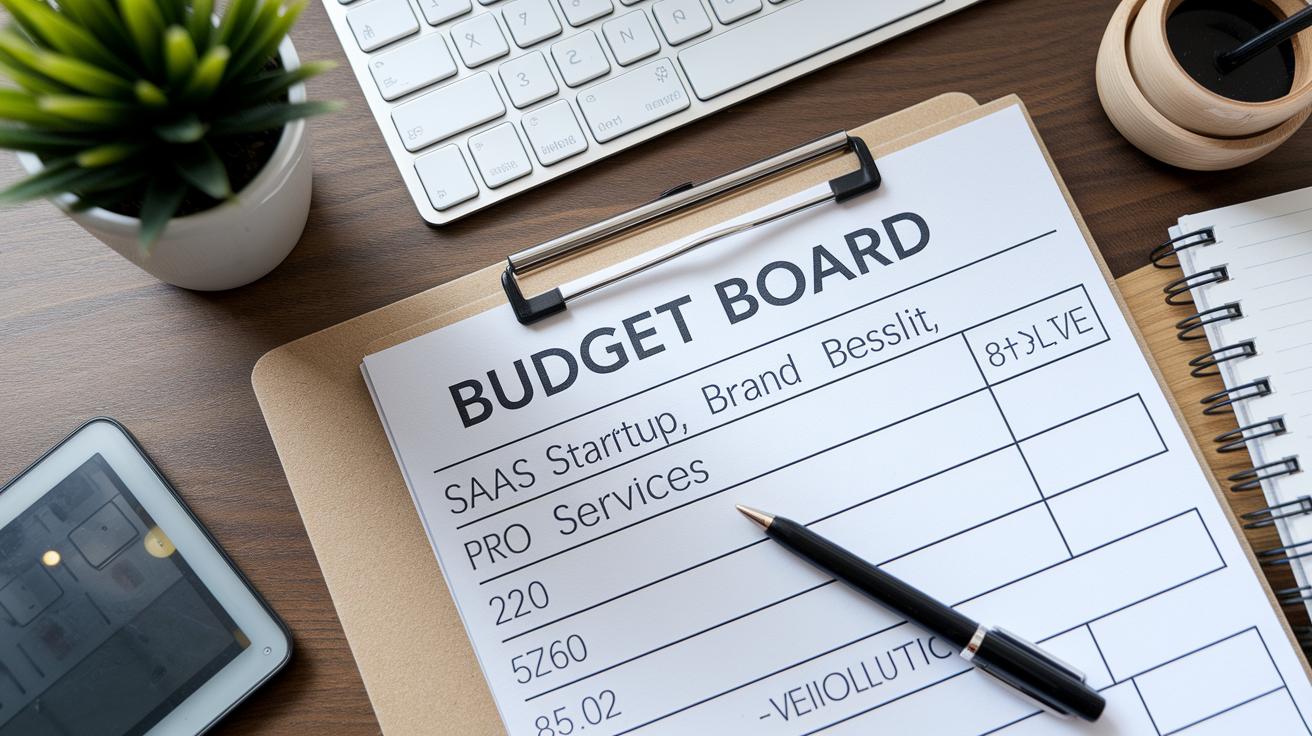
We've gathered fresh insights from our cost breakdown analysis to share real-world examples that show how a company’s size and goals drive its budget decisions.
| Business Type | Primary Channel |
|---|---|
| SaaS Startup | Search Ads (paid advertising on search engines) |
| Ecommerce Brand | Email Marketing (sending promotional messages directly to customers) |
| Professional Services | Lead Generation (collecting potential customer contacts) |
| DTC Brand | Creative Content & Social Media Ads (engaging ads on social platforms) |
| B2B Manufacturer | Data-Driven Online Ads (ads based on performance metrics) |
When you sit down to plan your budget, take a clear look at your business goals. Remember, sometimes even a small investment in well-targeted ads can trigger a burst of user engagement.
Final Words
in the action, we explored the blueprint behind a digital marketing budget plan, breaking it down into core spend areas and a clear step-by-step process. We reviewed how to plan channel allocations, use ready-to-go templates and frameworks, and track ROI using performance metrics. The discussion on best practices and real-life examples painted a vivid picture of how strategic budgeting can power smart ad decisions. Keep these insights handy and stay positive as you refine your plan to drive effective, results-driven campaigns.
FAQ
Q: What digital marketing budget plan templates are available?
A: Digital marketing budget plan templates come in Excel, Google Sheets, and PDF formats. They offer ready-made frameworks for organizing spend across advertising, content, personnel, and more, making your financial planning easier.
Q: What is a good budget for digital marketing?
A: A good digital marketing budget depends on your business goals and size. Many companies use past performance and industry benchmarks to allocate spend that supports growth and meets marketing objectives.
Q: What does the 70-20-10 rule in digital marketing mean?
A: The 70-20-10 rule means splitting your marketing budget so that 70% supports proven strategies, 20% tests incremental ideas, and 10% explores new approaches. This setup offers a balanced method for spending.
Q: How do you calculate a digital marketing budget?
A: Calculating a digital marketing budget involves reviewing your overall funds, breaking down costs into areas like software, advertising, and content, and using historical performance data to guide allocations that aim for solid returns.